Higher Yields, Oil Prices and Potentially Interest Rates Trigger Risk-Off Sentiment.
Trading Leveraged products is Risky
Gold and the stock market witnessed a strong decline on Friday as investors priced in no interest rate cuts for 2026. Investors are being shaken by higher inflation figures and bond yields rising. Particularly, bond yields have risen to a 14-month high which makes the US Dollar more attractive but pressures Gold and the stock market.
Interest rates and Bond Yields Trigger Unfavourable Conditions
There is no new development indicating that the stock market is on the verge of witnessing a significant selloff. However, market conditions are deteriorating for Gold and the stock market making it difficult to maintain an upward trend.
The main concerns for investors are interest rates, bond yields, and oil prices. US inflation has risen from 3.3% to 3.8% and core inflation rose by double the previous month. In addition to this, producer inflation rose to its highest level in four years. For this reason, investors are expecting the Federal Reserve to not cut interest rates at all in 2026.
Higher interest rates alone can pressure the stock market and Gold. However, higher bond yields also add additional pressure on the two assets by increasing the value of the US Dollar. The US 10-Year Treasury yield has risen 73 basis points this morning and continues to trade above 4.5%. Trading above this level is known to pressure Gold while above 5% tends to see investors clicking the panic button.
Higher Oil Prices
Oil prices on Friday morning have risen by more than 2%, rising close to the key resistance level of $103.75. Prices are increasing for three reasons which are ultimately triggering a ‘risk-off’ appetite throughout the whole market. The three reasons are the Strait continuing to remain closed, Iran seizing a ship near Oman and Trump’s comments before leaving China.
According to Trump, China is now willing to purchase oil from the US. China has not confirmed this. However, Trump’s statement suggests Beijing may be looking to diversify its oil supply amid rising Middle East tensions and growing risks around the Strait of Hormuz.
NASDAQ Comes Under Pressure From Bond Yields
The NASDAQ this morning has fallen slightly above 1%, triggering short-term sell signals but not validating a long-term trend yet. In addition to the above which continues to pressure the stock market, investors are also concerned about AI-related companies keeping the stock market afloat.

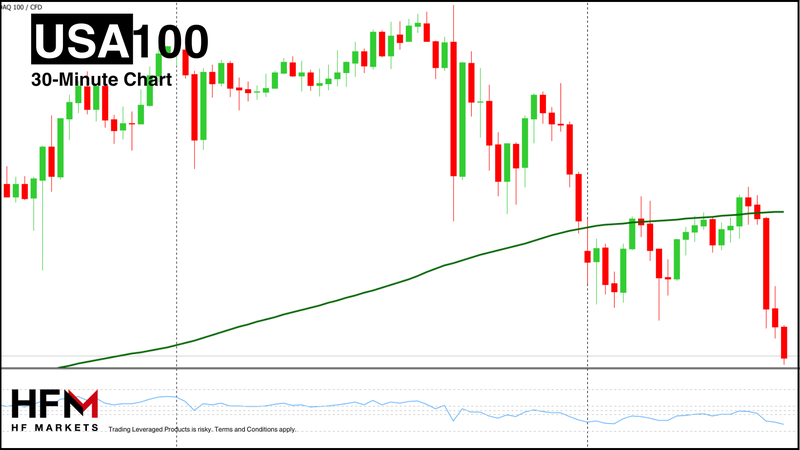
HFM - NASDAQ 30-Minute Chart
Nasdaq 100 futures are still trading well above the key medium-term moving averages on larger timeframes. For example, the 20-day, 50-day, 100-day, and 200-day averages are all below current price, confirming that the wider trend remains positive. In addition to this, on smaller timeframes the decline has now reached a key support level.
However, short-term indicators are clearly pointing towards a decline. The VWAP is trading above the price, as are the Parabolic SARs and Moving Averages. If the price rises above $29,515.00 buy signals will again return as more than 65% of the decline would have been regained. However, if the price remains lower than this level, bearish impulse waves remain possible.
Immediate resistance sits near 29,530–29,600, while support is around 29,420, followed by 29,320 if selling pressure continues.
Gold Dives Due To Dollar Demand
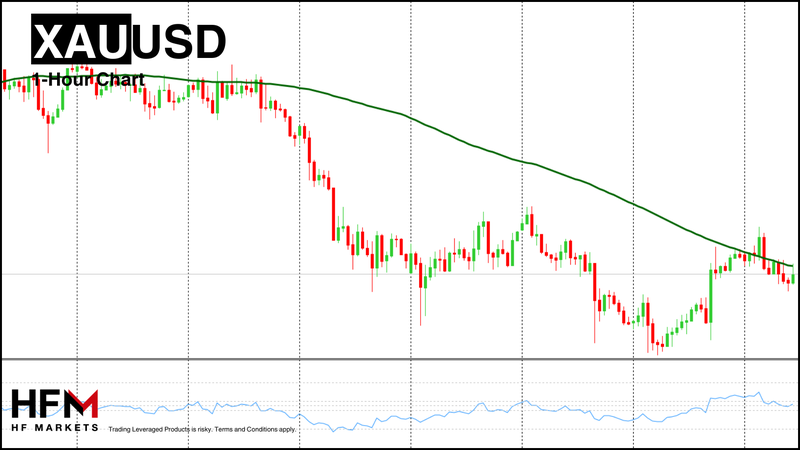
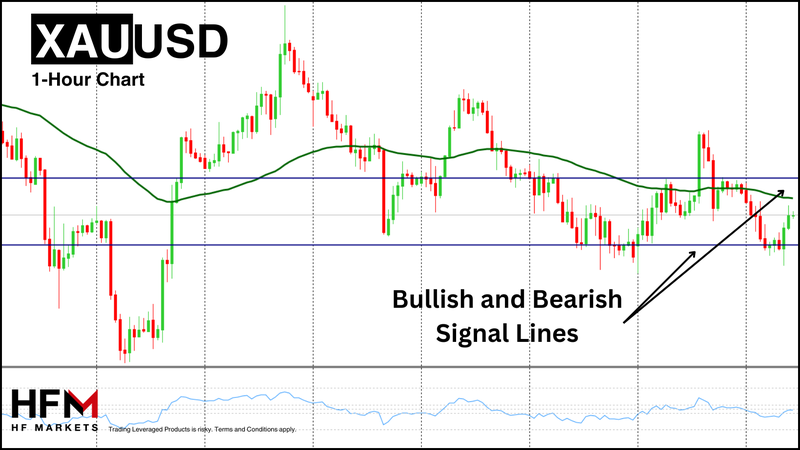
Gold remains under short-term technical pressure, despite its broader safe-haven appeal. High bond yields are resulting in investors not using Gold as their preferred safe-haven option. The latest move shows XAU/USD struggling to regain upside momentum after recent weakness, with daily technical indicators still leaning bearish and moving averages showing a ‘Strong Sell’ bias. The price is trading below the recent recovery zone, with immediate resistance around $4,637–$4,670, followed by a stronger cap near $4,708.
On the downside, key support sits around $4,605, followed by $4,560 and the previous swing-low area near $4,503. A break above $4,670 could suggest buyers are trying to stabilise the market, but as long as Gold remains capped below $4,708, the short-term bias remains corrective. A move below $4,605 would increase the risk of further downside towards $4,560.
Key Takeaway Points:
1. Gold and stocks declined as investors reduced expectations for Federal Reserve rate cuts in 2026.
2. Higher bond yields strengthened the US Dollar, adding pressure on equities and Gold.
3. Rising oil prices increased inflation concerns and supported broader risk-off sentiment.
4. NASDAQ and Gold remain technically weak, with short-term sell signals still active.
Always trade with strict risk management. Your capital is the single most important aspect of your trading business.
Please note that times displayed based on local time zone and are from time of writing this report.
Click HERE to access the full HFM Economic calendar.
Want to learn to trade and analyse the markets? Join our webinars and get analysis and trading ideas combined with better understanding of how markets work. Click HERE to register for FREE!
Click HERE to READ more Market news.
Michalis Efthymiou
HFMarkets
Disclaimer: This material is provided as a general marketing communication for information purposes only and does not constitute an independent investment research. Nothing in this communication contains, or should be considered as containing, an investment advice or an investment recommendation or a solicitation for the purpose of buying or selling of any financial instrument. All information provided is gathered from reputable sources and any information containing an indication of past performance is not a guarantee or reliable indicator of future performance. Users acknowledge that any investment in Leveraged Products is characterized by a certain degree of uncertainty and that any investment of this nature involves a high level of risk for which the users are solely responsible and liable. We assume no liability for any loss arising from any investment made based on the information provided in this communication. This communication must not be reproduced or further distributed without our prior written permission.