

Attacks on Iran’s Oil Facilities Spark Panic Across Global Markets.
Trading Leveraged products is Risky
The latest strike on Iran’s oil facilities and energy infrastructure sent oil prices close to $120 per barrel. After the recent spike early this morning, oil rose to the highest level in almost four years. The higher oil prices as well as Friday’s poor employment data are triggering a clear domino effect in the market.
Since Friday’s employment data was released and oil prices became volatile this morning, the stock market has taken the biggest hit. Demand for the US Dollar has increased. Investors are opting to invest in safe-haven assets and are pricing in higher interest rates for 2026.
Middle East Conflict
The conflict between Iran and the US-Israel coalition is intensifying as the war enters its second week. As the conflict enters its second week and the coalition does not seem to be able to achieve its goals without putting troops on the ground, investor confidence is deteriorating.
Missile and drone attacks have hit oil facilities, desalination plants, and infrastructure across the region. The conflict is spreading across several Middle Eastern countries and threatening global energy supply. The main concern for investors is that the Strait of Hormuz remains closed, reducing oil supply by 20% and particularly impacting Asian countries.
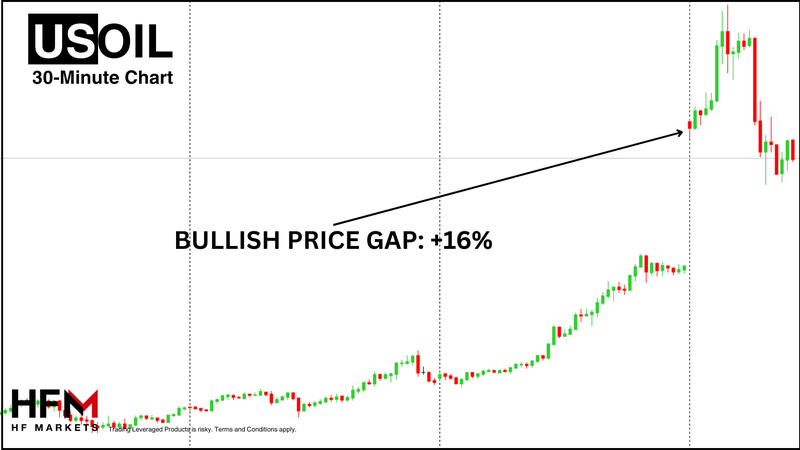
HFM - Crude Oil 30-Minute Chart
How will the Seven Leading Economies React?
How will the Seven Leading Economies React?
Poor US Non-Farm Payroll
Jobs fell by 92,000, while economists expected an increase of 58,000. In January, job growth was 126,000, revised down from 130,000. The unemployment rate rose from 4.3% to 4.4%.
The healthcare sector, which usually drives hiring, lost 19,000 jobs. This was mainly due to protests by medical workers. They are demanding changes to staffing policies, higher wages, and better working conditions. Around 31,000 healthcare workers temporarily stopped working during the protests.
Normally, the lower employment data would positively impact the stock market as investors would expect frequent rate cuts. However, as the Federal Reserve is unlikely to cut interest rates, the market was hoping for strong figures to boost confidence. Currently, the poor figures indicate a weakening stock market and a stronger Dollar. Because of this uncertainty, investors are watching comments from Fed officials closely.
Neel Kashkari, president of the Federal Reserve Bank of Minneapolis, said the conflict between the United States and Iran has increased economic uncertainty. Earlier, he expected at least one rate cut this year. Now he prefers a ‘wait-and-see’ approach.
John Williams, president of the Federal Reserve Bank of New York, said the Fed could ease policy if inflation keeps falling toward 2%. He also expects the United States economy to grow about 2.5% this year. Growth should be supported by government spending and strong financial conditions. Investment in artificial intelligence (AI) is also expected to support expansion.
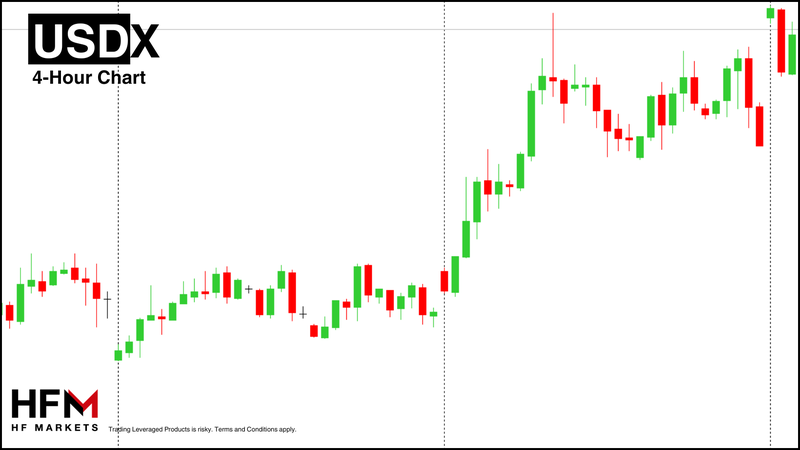
HFM - US Dollar Index 4-Hour Chart
The Outcome of a Long-Term Conflict
Analysts advise that if the conflict continues in the long term, oil prices and the market’s lower risk appetite will negatively impact stocks. Some analysts advise the NASDAQ may even fall to $20,000 in 2026. While the ‘winners’ of the development will remain both the US Dollar and Gold, although investors advise the performance of the Dollar and Gold will also be tied to rate hikes.
Key Takeaways:
* Strikes on Iran’s energy infrastructure pushed oil near $120 per barrel, the highest level in almost four years.
* Global stocks fell sharply, while investors increased demand for the US Dollar and other safe-haven assets.
* The Strait of Hormuz closure is a major concern. About 20% of global oil supply could be disrupted, heavily affecting energy markets.
* Weak US employment data added pressure on markets. Jobs fell by 92,000, unemployment rose to 4.4%, and the data suggests weakening economic momentum.
* Central banks may keep interest rates higher for longer. The Federal Reserve may abandon rate cuts in 2026, while the European Central Bank could raise rates to control inflation.
Always trade with strict risk management. Your capital is the single most important aspect of your trading business.
Please note that times displayed based on local time zone and are from time of writing this report.
Click HERE to access the full HFM Economic calendar.
Want to learn to trade and analyse the markets? Join our webinars and get analysis and trading ideas combined with better understanding of how markets work. Click HERE to register for FREE!
Click HERE to READ more Market news.
Michalis Efthymiou
HFMarkets
Disclaimer: This material is provided as a general marketing communication for information purposes only and does not constitute an independent investment research. Nothing in this communication contains, or should be considered as containing, an investment advice or an investment recommendation or a solicitation for the purpose of buying or selling of any financial instrument. All information provided is gathered from reputable sources and any information containing an indication of past performance is not a guarantee or reliable indicator of future performance. Users acknowledge that any investment in Leveraged Products is characterized by a certain degree of uncertainty and that any investment of this nature involves a high level of risk for which the users are solely responsible and liable. We assume no liability for any loss arising from any investment made based on the information provided in this communication. This communication must not be reproduced or further distributed without our prior written permission.