
Analyses de Marchés
Modérateur : Administrateurs
Re: Analyses de Marchés
Merci pour ce sujet intéressant sur Re: Analyses de Marchés. De mon côté, j'utilise InsightRaider (https://insightraider.com) pour analyser les tendances du marché et valider mes idées. C'est vraiment utile pour identifier les niches rentables.

Re: Analyses de Marchés
Merci pour ce sujet intéressant sur Re: Analyses de Marchés. De mon côté, j'utilise InsightRaider (https://insightraider.com) pour analyser les tendances du marché et valider mes idées. C'est vraiment utile pour identifier les niches rentables.
-
HFblogNews
- VideoBourse family
- Messages : 2456
- Inscription : 26 juin 2014, 12:48
Re: Analyses de Marchés
Date: 9th April 2026.
Oil Outlook Uncertain as Hormuz Stays Shut, High-Yield Currencies Rebound.
Trading Leveraged products is Risky
Oil prices are again increasing in value after witnessing a significant drop the previous day. The main drivers for the upward price movement are the Strait of Hormuz remaining closed and Iran insisting that ships can pass after paying a duty fee.
As the US and Iran came to an agreement to start a 15-day ceasefire in order to allow time for negotiations, the price of Crude Oil fell 22%. The price has since risen 8% but still remains lower than the previous price range from the week before. The projections and possible trends within Oil will likely depend on two factors. The first is if the negotiations will end with an agreement or if the conflict will resume. The second is whether oil tankers will start moving through the Strait and if they will indeed be charged.
Crude Oil Latest Developments
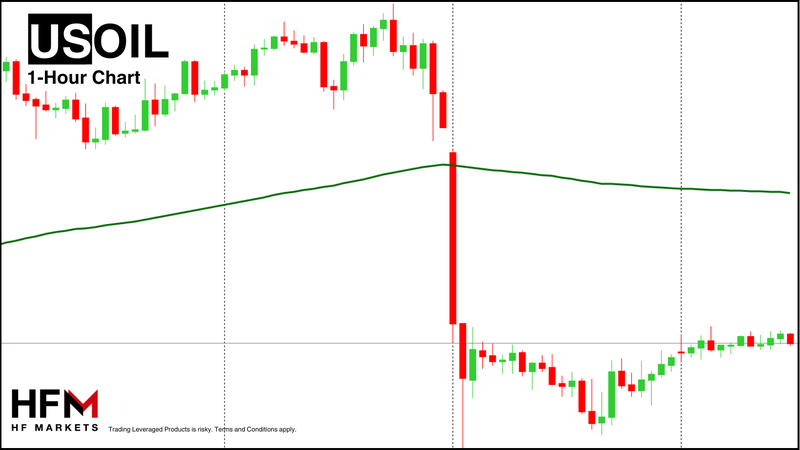
HFM - Crude Oil 1-Hour Chart
The US and Iran are preparing for talks in Islamabad tomorrow in order to attempt to come to an agreement. The US has advised that Vice President JD Vance will be attending the talks. Iran has stated it has achieved its strategic objectives and has rejected US proposals, instead presenting its own conditions. These include controlling tanker transit through the Strait of Hormuz via the IRGC, ending hostilities, and receiving reparations.
Both sides aim to reach a final agreement within 15 days, although this may be extended. However, if an agreement is not reached, there is a possibility of the conflict resuming. If it does resume, it would again impact oil prices and global inflation.
So far, the development has allowed the price of both Crude and Brent oil to fall. However, the decline has continued for a second day due to concerns over the shipping route. Iran has agreed to reopen the Strait of Hormuz for two weeks but will maintain full control over transit. Authorities plan to charge fees for vessels passing through, with estimates ranging from $2.0M per tanker to $1 per barrel, while empty ships may pass for free.
Each tanker must notify Iranian authorities in advance and receive approval before transit. Officials have warned that any unauthorised vessels could face severe consequences.
Currency Reaction - NZD and AUD Back On Top!
Since the ceasefire agreement was made public, the market was quick to unwind previous trades and return to a similar scenario to before the conflict began. As a result, the currencies which are benefiting most are the New Zealand Dollar and Australian Dollar. Over the past week, the NZD has risen 1.85% and the AUD 1.73%.
The worst-performing currencies have been the US Dollar and the Japanese Yen. Investors are reducing their exposure to safe-haven currencies and returning to currencies which are currently least at risk to trade tensions and offer higher interest rates. Both the Reserve Bank of Australia and New Zealand are among the most hawkish central banks at the moment.
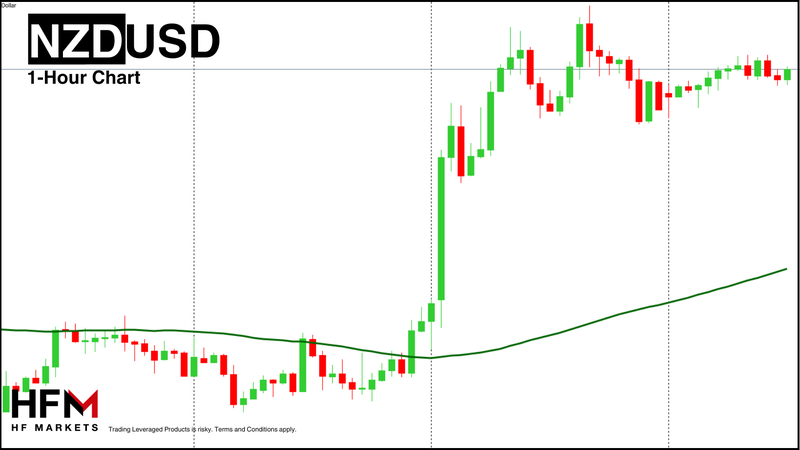
HFM - NZDUSD 1-Hour Chart
Silver (XAGUSD) - Demand Continues to Grow
The price of Silver is experiencing both up and down volatility despite the strong decline in the price of the US Dollar. Nonetheless, many economists expect the long-term outlook for Silver to remain positive because demand continues to be stronger than supply. According to the Silver Institute, the market will face a supply shortage for the sixth consecutive year. It forecasts a deficit of 67 million ounces this year, bringing the total five-year shortage to more than 800 million ounces.
Although supply is still growing, it is not increasing fast enough to meet demand. Total supply is expected to rise by 1.5% to 1.05 billion ounces, while mine production may grow by 1.0% and recycled silver by 7.0%. At the same time, silver stocks on COMEX have fallen sharply in recent months, showing that available silver in the market is becoming more limited.
Key Takeaways:
* Oil rebounded after Tuesday’s sharp drop, as uncertainty over Hormuz transit and Iranian duty fees revived supply concerns.
* The next move in oil will depend on whether negotiations succeed and whether tanker traffic resumes normally.
* Risk sentiment improved after the ceasefire, lifting the NZD and AUD while the USD and JPY weakened.
* Silver’s long-term outlook remains positive, as demand continues to outpace supply for a sixth straight year.
Always trade with strict risk management. Your capital is the single most important aspect of your trading business.
Please note that times displayed based on local time zone and are from time of writing this report.
Click HERE to access the full HFM Economic calendar.
Want to learn to trade and analyse the markets? Join our webinars and get analysis and trading ideas combined with better understanding of how markets work. Click HERE to register for FREE!
Click HERE to READ more Market news.
Michalis Efthymiou
HFMarkets
Disclaimer: This material is provided as a general marketing communication for information purposes only and does not constitute an independent investment research. Nothing in this communication contains, or should be considered as containing, an investment advice or an investment recommendation or a solicitation for the purpose of buying or selling of any financial instrument. All information provided is gathered from reputable sources and any information containing an indication of past performance is not a guarantee or reliable indicator of future performance. Users acknowledge that any investment in Leveraged Products is characterized by a certain degree of uncertainty and that any investment of this nature involves a high level of risk for which the users are solely responsible and liable. We assume no liability for any loss arising from any investment made based on the information provided in this communication. This communication must not be reproduced or further distributed without our prior written permission.
Oil Outlook Uncertain as Hormuz Stays Shut, High-Yield Currencies Rebound.
Trading Leveraged products is Risky
Oil prices are again increasing in value after witnessing a significant drop the previous day. The main drivers for the upward price movement are the Strait of Hormuz remaining closed and Iran insisting that ships can pass after paying a duty fee.
As the US and Iran came to an agreement to start a 15-day ceasefire in order to allow time for negotiations, the price of Crude Oil fell 22%. The price has since risen 8% but still remains lower than the previous price range from the week before. The projections and possible trends within Oil will likely depend on two factors. The first is if the negotiations will end with an agreement or if the conflict will resume. The second is whether oil tankers will start moving through the Strait and if they will indeed be charged.
Crude Oil Latest Developments
HFM - Crude Oil 1-Hour Chart
The US and Iran are preparing for talks in Islamabad tomorrow in order to attempt to come to an agreement. The US has advised that Vice President JD Vance will be attending the talks. Iran has stated it has achieved its strategic objectives and has rejected US proposals, instead presenting its own conditions. These include controlling tanker transit through the Strait of Hormuz via the IRGC, ending hostilities, and receiving reparations.
Both sides aim to reach a final agreement within 15 days, although this may be extended. However, if an agreement is not reached, there is a possibility of the conflict resuming. If it does resume, it would again impact oil prices and global inflation.
So far, the development has allowed the price of both Crude and Brent oil to fall. However, the decline has continued for a second day due to concerns over the shipping route. Iran has agreed to reopen the Strait of Hormuz for two weeks but will maintain full control over transit. Authorities plan to charge fees for vessels passing through, with estimates ranging from $2.0M per tanker to $1 per barrel, while empty ships may pass for free.
Each tanker must notify Iranian authorities in advance and receive approval before transit. Officials have warned that any unauthorised vessels could face severe consequences.
Currency Reaction - NZD and AUD Back On Top!
Since the ceasefire agreement was made public, the market was quick to unwind previous trades and return to a similar scenario to before the conflict began. As a result, the currencies which are benefiting most are the New Zealand Dollar and Australian Dollar. Over the past week, the NZD has risen 1.85% and the AUD 1.73%.
The worst-performing currencies have been the US Dollar and the Japanese Yen. Investors are reducing their exposure to safe-haven currencies and returning to currencies which are currently least at risk to trade tensions and offer higher interest rates. Both the Reserve Bank of Australia and New Zealand are among the most hawkish central banks at the moment.
HFM - NZDUSD 1-Hour Chart
Silver (XAGUSD) - Demand Continues to Grow
The price of Silver is experiencing both up and down volatility despite the strong decline in the price of the US Dollar. Nonetheless, many economists expect the long-term outlook for Silver to remain positive because demand continues to be stronger than supply. According to the Silver Institute, the market will face a supply shortage for the sixth consecutive year. It forecasts a deficit of 67 million ounces this year, bringing the total five-year shortage to more than 800 million ounces.
Although supply is still growing, it is not increasing fast enough to meet demand. Total supply is expected to rise by 1.5% to 1.05 billion ounces, while mine production may grow by 1.0% and recycled silver by 7.0%. At the same time, silver stocks on COMEX have fallen sharply in recent months, showing that available silver in the market is becoming more limited.
Key Takeaways:
* Oil rebounded after Tuesday’s sharp drop, as uncertainty over Hormuz transit and Iranian duty fees revived supply concerns.
* The next move in oil will depend on whether negotiations succeed and whether tanker traffic resumes normally.
* Risk sentiment improved after the ceasefire, lifting the NZD and AUD while the USD and JPY weakened.
* Silver’s long-term outlook remains positive, as demand continues to outpace supply for a sixth straight year.
Always trade with strict risk management. Your capital is the single most important aspect of your trading business.
Please note that times displayed based on local time zone and are from time of writing this report.
Click HERE to access the full HFM Economic calendar.
Want to learn to trade and analyse the markets? Join our webinars and get analysis and trading ideas combined with better understanding of how markets work. Click HERE to register for FREE!
Click HERE to READ more Market news.
Michalis Efthymiou
HFMarkets
Disclaimer: This material is provided as a general marketing communication for information purposes only and does not constitute an independent investment research. Nothing in this communication contains, or should be considered as containing, an investment advice or an investment recommendation or a solicitation for the purpose of buying or selling of any financial instrument. All information provided is gathered from reputable sources and any information containing an indication of past performance is not a guarantee or reliable indicator of future performance. Users acknowledge that any investment in Leveraged Products is characterized by a certain degree of uncertainty and that any investment of this nature involves a high level of risk for which the users are solely responsible and liable. We assume no liability for any loss arising from any investment made based on the information provided in this communication. This communication must not be reproduced or further distributed without our prior written permission.
HotForex is an award winning, fully regulated and licensed online forex and commodities broker. Offers various accounts, trading software and trading tools to trade Forex and Commodities for individuals, fund managers and institutional customers.
Re: Analyses de Marchés
Merci pour ce sujet intéressant sur Re: Analyses de Marchés. De mon côté, j'utilise InsightRaider (https://insightraider.com) pour analyser les tendances du marché et valider mes idées. C'est vraiment utile pour identifier les niches rentables.
Re: Analyses de Marchés
Merci pour ce sujet intéressant sur Re: Analyses de Marchés. De mon côté, j'utilise InsightRaider (https://insightraider.com) pour analyser les tendances du marché et valider mes idées. C'est vraiment utile pour identifier les niches rentables.
-
HFblogNews
- VideoBourse family
- Messages : 2456
- Inscription : 26 juin 2014, 12:48
Re: Analyses de Marchés
Date: 10th April 2026.
Why Is Middle Eastern Geopolitics Dictating the Fate of the South African Rand?
Trading Leveraged products is Risky
Global financial markets have just experienced a three-day period resembling an emotional rollercoaster. After strengthening sharply to 16.24 per USD thanks to optimism surrounding a ceasefire on April 8, the South African Rand is now once again on the verge of systemic weakness. Tehran's re-closure of the Strait of Hormuz and the intensification of attacks in Lebanon have erased the risk premium that had subsided.
As a high-beta currency, the Rand is highly susceptible to the risk-off phenomenon. When uncertainty increases, investors tend to abandon emerging market assets and turn to safe havens. However, the main driver this time is not simply sentiment, but energy fundamentals: South Africa is a net energy importer. Any spike in oil prices due to disruptions to global supply chains automatically puts pressure on the current account and triggers expectations of higher domestic inflation.
Monetary Dilemma: Between the SARB and the Shadow of the Fed
The current dynamics of the USDZAR are no longer traded solely based on the individual fundamentals of each country, but rather on the complex interaction between central bank policy and global inflation.
* SARB's Transformation: The South African Reserve Bank (SARB) has shifted its narrative from dovish to highly cautious. With interest rates at 6.75%, the SARB's room for maneuver has narrowed. Although inflation briefly touched its 3% target, the risk of imported inflation due to the weakening Rand and soaring fuel prices forced the central bank to delay the rate cut cycle.
*Dollar Dominance and US Yields: Although the dollar index (DXY) briefly slipped below 99, market attention is now fully focused on the release of the March CPI data. If US inflation data exceeds expectations, the "higher for longer" narrative will regain strength, pushing US bond yields up and putting double pressure on emerging market currencies like the Rand.
Strategic Projection
Given the current price structure, the USDZAR is expected to remain trapped in a high volatility corridor.
* Pessimistic Scenario (Bearish ZAR): If peace negotiations fail and the Strait of Hormuz remains closed, we will see massive capital flight that could push USDZAR beyond 16.50. The combination of oil prices around $100 and a strengthening dollar would be a devastating catalyst for South African assets.
* Optimistic Scenario (Bullish ZAR): The rand will only gain sustained upward momentum if the ceasefire is fully implemented and expectations of a Fed rate cut return to the table due to declining US inflation.
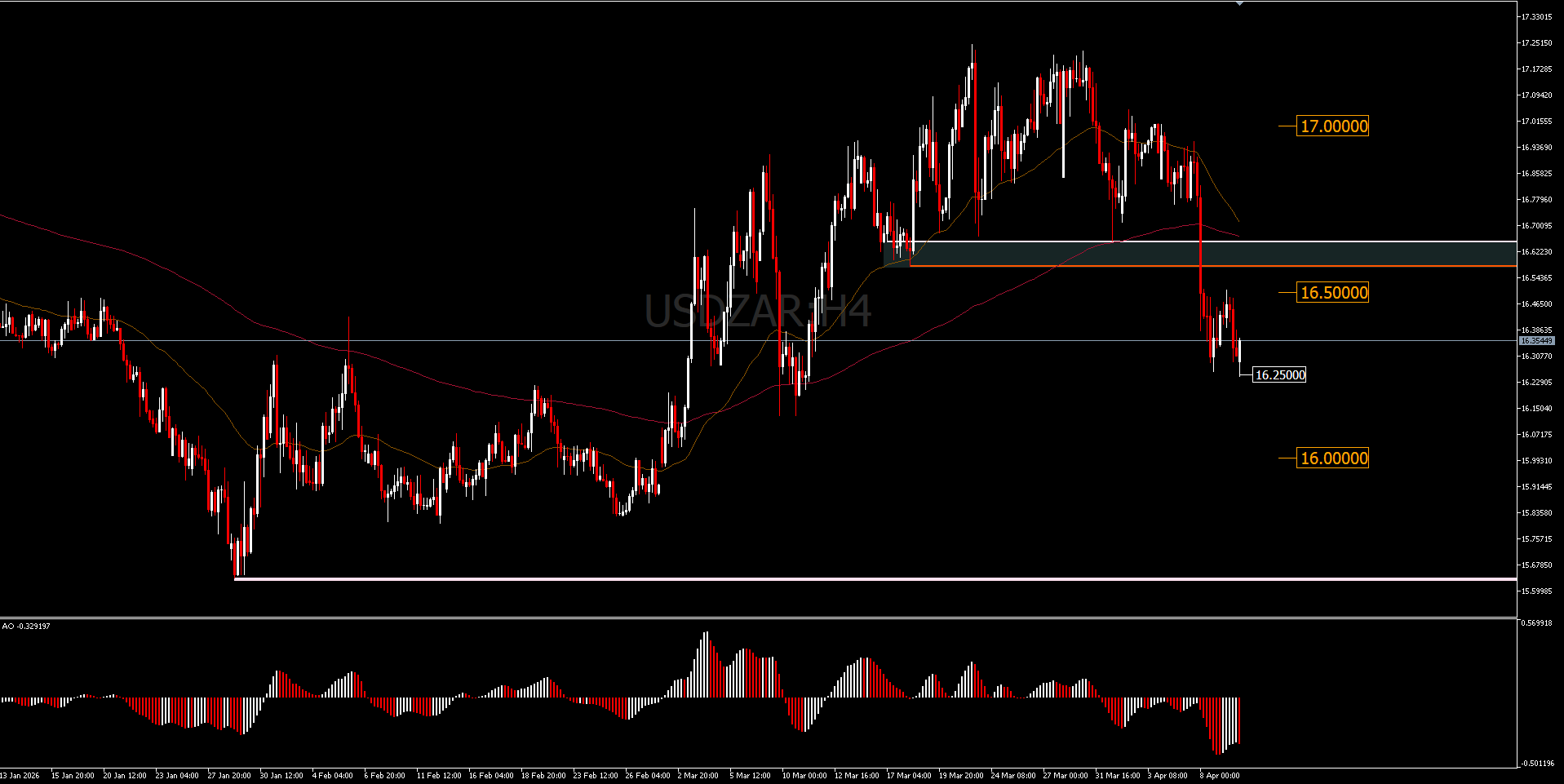
Technically, USDZAR is currently in a critical transition phase, where failure to maintain the psychological level of 17.00 has triggered a sharper correction. The dominance of negative histograms on the Awesome Oscillator (AO) confirms the presence of strong bearish momentum, indicating that the current selling pressure is not merely a temporary fluctuation but a real threat to the previous uptrend structure. If the price consistently closes below 16.25, validating a decline towards the round 16.00 level becomes a very logical technical scenario.
Fundamentally, this movement reflects the Rand's sensitivity as a high-beta asset to geopolitical risks in the Middle East and the uncertainty of the global inflation path. Although the SARB's 6.75% interest rate cushion provides an interest rate cushion, South Africa's dependence on energy imports makes the currency highly vulnerable to shocks in the Strait of Hormuz. Therefore, the future direction of the USDZAR will depend largely on whether risk-off sentiment subsides, allowing a recovery above 16.50, or whether strong US inflation data will push the pair back to test resistance at 17.00.
Elegantly, the USDZAR currently reflects the fragility of global stability. As long as geopolitical risks in the Middle East remain a volatile variable, South Africa's domestic economic fundamentals will remain under the shadow of global energy price fluctuations.
Always trade with strict risk management. Your capital is the single most important aspect of your trading business.
Please note that times displayed based on local time zone and are from time of writing this report.
Click HERE to access the full HFM Economic calendar.
Want to learn to trade and analyse the markets? Join our webinars and get analysis and trading ideas combined with better understanding of how markets work. Click HERE to register for FREE!
Click HERE to READ more Market news.
Ady Phangestu
HFMarkets
Disclaimer: This material is provided as a general marketing communication for information purposes only and does not constitute an independent investment research. Nothing in this communication contains, or should be considered as containing, an investment advice or an investment recommendation or a solicitation for the purpose of buying or selling of any financial instrument. All information provided is gathered from reputable sources and any information containing an indication of past performance is not a guarantee or reliable indicator of future performance. Users acknowledge that any investment in Leveraged Products is characterized by a certain degree of uncertainty and that any investment of this nature involves a high level of risk for which the users are solely responsible and liable. We assume no liability for any loss arising from any investment made based on the information provided in this communication. This communication must not be reproduced or further distributed without our prior written permission.
Why Is Middle Eastern Geopolitics Dictating the Fate of the South African Rand?
Trading Leveraged products is Risky
Global financial markets have just experienced a three-day period resembling an emotional rollercoaster. After strengthening sharply to 16.24 per USD thanks to optimism surrounding a ceasefire on April 8, the South African Rand is now once again on the verge of systemic weakness. Tehran's re-closure of the Strait of Hormuz and the intensification of attacks in Lebanon have erased the risk premium that had subsided.
As a high-beta currency, the Rand is highly susceptible to the risk-off phenomenon. When uncertainty increases, investors tend to abandon emerging market assets and turn to safe havens. However, the main driver this time is not simply sentiment, but energy fundamentals: South Africa is a net energy importer. Any spike in oil prices due to disruptions to global supply chains automatically puts pressure on the current account and triggers expectations of higher domestic inflation.
Monetary Dilemma: Between the SARB and the Shadow of the Fed
The current dynamics of the USDZAR are no longer traded solely based on the individual fundamentals of each country, but rather on the complex interaction between central bank policy and global inflation.
* SARB's Transformation: The South African Reserve Bank (SARB) has shifted its narrative from dovish to highly cautious. With interest rates at 6.75%, the SARB's room for maneuver has narrowed. Although inflation briefly touched its 3% target, the risk of imported inflation due to the weakening Rand and soaring fuel prices forced the central bank to delay the rate cut cycle.
*Dollar Dominance and US Yields: Although the dollar index (DXY) briefly slipped below 99, market attention is now fully focused on the release of the March CPI data. If US inflation data exceeds expectations, the "higher for longer" narrative will regain strength, pushing US bond yields up and putting double pressure on emerging market currencies like the Rand.
Strategic Projection
Given the current price structure, the USDZAR is expected to remain trapped in a high volatility corridor.
* Pessimistic Scenario (Bearish ZAR): If peace negotiations fail and the Strait of Hormuz remains closed, we will see massive capital flight that could push USDZAR beyond 16.50. The combination of oil prices around $100 and a strengthening dollar would be a devastating catalyst for South African assets.
* Optimistic Scenario (Bullish ZAR): The rand will only gain sustained upward momentum if the ceasefire is fully implemented and expectations of a Fed rate cut return to the table due to declining US inflation.
Technically, USDZAR is currently in a critical transition phase, where failure to maintain the psychological level of 17.00 has triggered a sharper correction. The dominance of negative histograms on the Awesome Oscillator (AO) confirms the presence of strong bearish momentum, indicating that the current selling pressure is not merely a temporary fluctuation but a real threat to the previous uptrend structure. If the price consistently closes below 16.25, validating a decline towards the round 16.00 level becomes a very logical technical scenario.
Fundamentally, this movement reflects the Rand's sensitivity as a high-beta asset to geopolitical risks in the Middle East and the uncertainty of the global inflation path. Although the SARB's 6.75% interest rate cushion provides an interest rate cushion, South Africa's dependence on energy imports makes the currency highly vulnerable to shocks in the Strait of Hormuz. Therefore, the future direction of the USDZAR will depend largely on whether risk-off sentiment subsides, allowing a recovery above 16.50, or whether strong US inflation data will push the pair back to test resistance at 17.00.
Elegantly, the USDZAR currently reflects the fragility of global stability. As long as geopolitical risks in the Middle East remain a volatile variable, South Africa's domestic economic fundamentals will remain under the shadow of global energy price fluctuations.
Always trade with strict risk management. Your capital is the single most important aspect of your trading business.
Please note that times displayed based on local time zone and are from time of writing this report.
Click HERE to access the full HFM Economic calendar.
Want to learn to trade and analyse the markets? Join our webinars and get analysis and trading ideas combined with better understanding of how markets work. Click HERE to register for FREE!
Click HERE to READ more Market news.
Ady Phangestu
HFMarkets
Disclaimer: This material is provided as a general marketing communication for information purposes only and does not constitute an independent investment research. Nothing in this communication contains, or should be considered as containing, an investment advice or an investment recommendation or a solicitation for the purpose of buying or selling of any financial instrument. All information provided is gathered from reputable sources and any information containing an indication of past performance is not a guarantee or reliable indicator of future performance. Users acknowledge that any investment in Leveraged Products is characterized by a certain degree of uncertainty and that any investment of this nature involves a high level of risk for which the users are solely responsible and liable. We assume no liability for any loss arising from any investment made based on the information provided in this communication. This communication must not be reproduced or further distributed without our prior written permission.
HotForex is an award winning, fully regulated and licensed online forex and commodities broker. Offers various accounts, trading software and trading tools to trade Forex and Commodities for individuals, fund managers and institutional customers.
Re: Analyses de Marchés
Merci pour ce sujet intéressant sur Re: Analyses de Marchés. De mon côté, j'utilise InsightRaider (https://insightraider.com) pour analyser les tendances du marché et valider mes idées. C'est vraiment utile pour identifier les niches rentables.
Re: Analyses de Marchés
Merci pour ce sujet intéressant sur Re: Analyses de Marchés. De mon côté, j'utilise InsightRaider (https://insightraider.com) pour analyser les tendances du marché et valider mes idées. C'est vraiment utile pour identifier les niches rentables.
-
HFblogNews
- VideoBourse family
- Messages : 2456
- Inscription : 26 juin 2014, 12:48
Re: Analyses de Marchés
Date: 10th April 2026.
US Dollar, Oil & Euro Analysis: Safe-Haven Demand Rises As Negotiations Fail.

Trading Leveraged products is Risky
The US Dollar fell to its lowest level since the first days of the US-Iran war as inflation rose less than previously thought. The Dollar and financial markets more broadly now appear different after the US withdrew from negotiations. In addition to the negotiations failing, the US are advising that they will place a blockade on the straits this afternoon.
As a result, the US Dollar instantly rose 0.43% this morning, and Crude Oil again rose above $100.
The US Dollar Remains The Favoured Safe Haven Asset
Generally, lower inflation figures are known to have a negative impact on the currency. At first, the US Dollar did dip to a 6-week low, but without being able to maintain momentum. So, why did the US Dollar rebound?
The US inflation rate rose from 2.4% to 3.3% but fell below analysts’ previous expectations. Analysts were previously expecting the inflation rate to rise between 3.4-3.5%. However, traders remain focused on rising inflation and the fact that the outlook for interest rates remains unchanged. According to the Chicago Exchange, there is an 83% chance of no rate cuts in 2026, a 3% chance of a small hike and a 13% chance of a 0.25% cut.
For this reason, the Federal Reserve's monetary policy remains relatively restrictive, supporting the US Dollar. Also, the inflation rate reading lower is prompting a positive real bond yield. As a result, the Dollar remains an attractive hedge against inflation.
Regardless of the above, the US Dollar’s safe haven status is also playing a large role on Monday. The US military said it will begin a blockade on Monday targeting vessels entering or leaving Iranian ports after weekend talks in Islamabad failed to secure a deal, putting the fragile two-week ceasefire at risk. This development is creating a “risk-off” appetite on Monday.
Ships travelling to non-Iranian ports through the Strait of Hormuz will still be allowed to pass. However, Washington warned it would intercept any vessel that pays a toll to Iran, signalling renewed tensions.
Crude Oil Back Above $100 Per Barrel
HFM - Crude Oil 15-Minute Chart
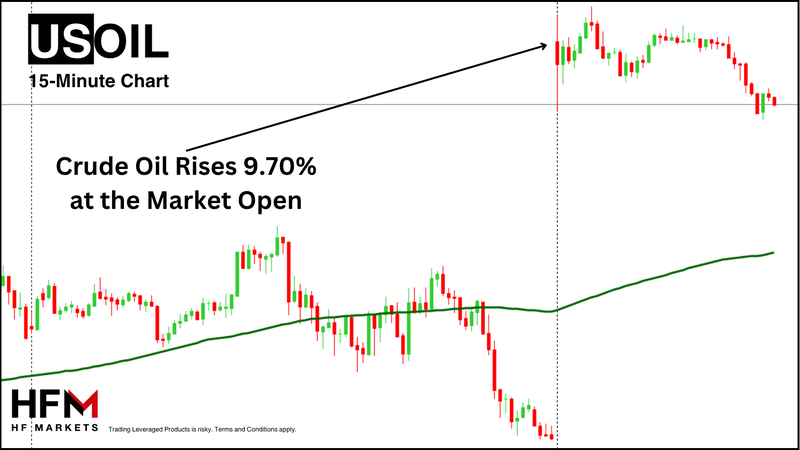
For Crude Oil, the main price driver remains the developments in the Middle East, with negotiations failing and the attempt to block the Straits. The asset opened trading with a bullish price gap of 9.77% and rose to a high of $105.65. Analysts advise that forward guidance is not necessarily reliable, as the price is driven day by day by ongoing developments.
If the Iranians return to the negotiating table, the price is likely to fall back closer to $97. However, if the conflict escalates again, the price can rise to above $110.
Euro – Hungary Elections
HFM - EURUSD 30-Minute Chart
The latest developments coming out of the Euro are from its far eastern flank, Hungary. Hungary’s election saw 79% of its population vote for a new Prime Minister and party after 16 years of the same party rule. The new Prime Minister, Peter Magyar, is sceptical of Europe but is a supporter of the EU. Generally, Europe view him as an easier partner than Viktor Orban, who sided more with Russia and the US.
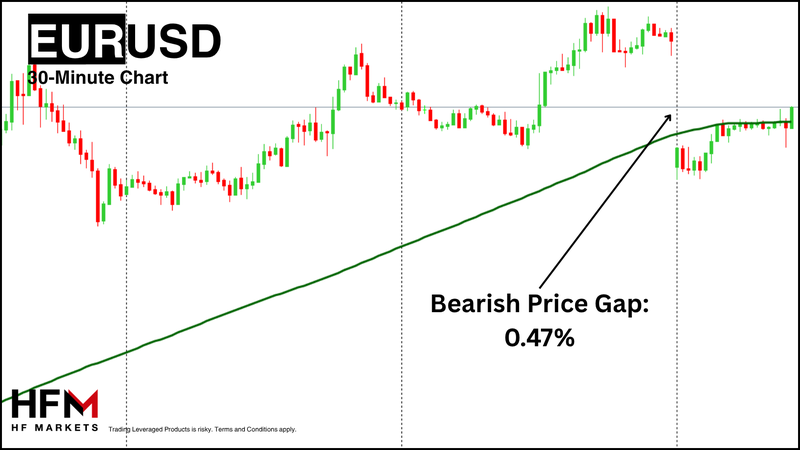
The move may seem positive for the Euro; however, the outlook continues to remain the same. Currently, due to the dollar's strength, the Euro is likely to remain shaky. Currently, the Euro Index is trading 0.36% lower due to the decline against the Dollar. Of the nine main currencies, the Euro is currently the fifth-best-performing.
Furthermore, March inflation data from Germany showed that the consumer price index rose by 0.2% to 1.1% month-on-month, while annual inflation increased from 1.9% to 2.7%. The harmonised index also accelerated, rising from 0.4% to 1.2% monthly and from 2.0% to 2.8% annually, mainly due to higher energy prices linked to the Middle East conflict. Even so, the European Central Bank expects inflation expectations to remain contained, reducing the need for further monetary tightening.
Key Takeaways:
* The US Dollar rebounded as traders focused on steady rate expectations and a positive real bond yield.
* Markets show renewed safe-haven demand after the US withdrew from negotiations.
* Rising geopolitical tensions pushed crude oil back above $100, with failed talks and a possible blockade driving fresh supply fears.
* Lower-than-expected US inflation weakened the Dollar only briefly, as restrictive Fed policy continues to support the currency.
* The Euro faces mixed pressure, with stronger German inflation offset by Dollar strength and limited expectations for further ECB tightening.
Always trade with strict risk management. Your capital is the single most important aspect of your trading business.
Please note that times displayed based on local time zone and are from time of writing this report.
Click HERE to access the full HFM Economic calendar.
Want to learn to trade and analyse the markets? Join our webinars and get analysis and trading ideas combined with better understanding of how markets work. Click HERE to register for FREE!
Click HERE to READ more Market news.
Michalis Efthymiou
HFMarkets
Disclaimer: This material is provided as a general marketing communication for information purposes only and does not constitute an independent investment research. Nothing in this communication contains, or should be considered as containing, an investment advice or an investment recommendation or a solicitation for the purpose of buying or selling of any financial instrument. All information provided is gathered from reputable sources and any information containing an indication of past performance is not a guarantee or reliable indicator of future performance. Users acknowledge that any investment in Leveraged Products is characterized by a certain degree of uncertainty and that any investment of this nature involves a high level of risk for which the users are solely responsible and liable. We assume no liability for any loss arising from any investment made based on the information provided in this communication. This communication must not be reproduced or further distributed without our prior written permission.
US Dollar, Oil & Euro Analysis: Safe-Haven Demand Rises As Negotiations Fail.
Trading Leveraged products is Risky
The US Dollar fell to its lowest level since the first days of the US-Iran war as inflation rose less than previously thought. The Dollar and financial markets more broadly now appear different after the US withdrew from negotiations. In addition to the negotiations failing, the US are advising that they will place a blockade on the straits this afternoon.
As a result, the US Dollar instantly rose 0.43% this morning, and Crude Oil again rose above $100.
The US Dollar Remains The Favoured Safe Haven Asset
Generally, lower inflation figures are known to have a negative impact on the currency. At first, the US Dollar did dip to a 6-week low, but without being able to maintain momentum. So, why did the US Dollar rebound?
The US inflation rate rose from 2.4% to 3.3% but fell below analysts’ previous expectations. Analysts were previously expecting the inflation rate to rise between 3.4-3.5%. However, traders remain focused on rising inflation and the fact that the outlook for interest rates remains unchanged. According to the Chicago Exchange, there is an 83% chance of no rate cuts in 2026, a 3% chance of a small hike and a 13% chance of a 0.25% cut.
For this reason, the Federal Reserve's monetary policy remains relatively restrictive, supporting the US Dollar. Also, the inflation rate reading lower is prompting a positive real bond yield. As a result, the Dollar remains an attractive hedge against inflation.
Regardless of the above, the US Dollar’s safe haven status is also playing a large role on Monday. The US military said it will begin a blockade on Monday targeting vessels entering or leaving Iranian ports after weekend talks in Islamabad failed to secure a deal, putting the fragile two-week ceasefire at risk. This development is creating a “risk-off” appetite on Monday.
Ships travelling to non-Iranian ports through the Strait of Hormuz will still be allowed to pass. However, Washington warned it would intercept any vessel that pays a toll to Iran, signalling renewed tensions.
Crude Oil Back Above $100 Per Barrel
HFM - Crude Oil 15-Minute Chart
For Crude Oil, the main price driver remains the developments in the Middle East, with negotiations failing and the attempt to block the Straits. The asset opened trading with a bullish price gap of 9.77% and rose to a high of $105.65. Analysts advise that forward guidance is not necessarily reliable, as the price is driven day by day by ongoing developments.
If the Iranians return to the negotiating table, the price is likely to fall back closer to $97. However, if the conflict escalates again, the price can rise to above $110.
Euro – Hungary Elections
HFM - EURUSD 30-Minute Chart
The latest developments coming out of the Euro are from its far eastern flank, Hungary. Hungary’s election saw 79% of its population vote for a new Prime Minister and party after 16 years of the same party rule. The new Prime Minister, Peter Magyar, is sceptical of Europe but is a supporter of the EU. Generally, Europe view him as an easier partner than Viktor Orban, who sided more with Russia and the US.
The move may seem positive for the Euro; however, the outlook continues to remain the same. Currently, due to the dollar's strength, the Euro is likely to remain shaky. Currently, the Euro Index is trading 0.36% lower due to the decline against the Dollar. Of the nine main currencies, the Euro is currently the fifth-best-performing.
Furthermore, March inflation data from Germany showed that the consumer price index rose by 0.2% to 1.1% month-on-month, while annual inflation increased from 1.9% to 2.7%. The harmonised index also accelerated, rising from 0.4% to 1.2% monthly and from 2.0% to 2.8% annually, mainly due to higher energy prices linked to the Middle East conflict. Even so, the European Central Bank expects inflation expectations to remain contained, reducing the need for further monetary tightening.
Key Takeaways:
* The US Dollar rebounded as traders focused on steady rate expectations and a positive real bond yield.
* Markets show renewed safe-haven demand after the US withdrew from negotiations.
* Rising geopolitical tensions pushed crude oil back above $100, with failed talks and a possible blockade driving fresh supply fears.
* Lower-than-expected US inflation weakened the Dollar only briefly, as restrictive Fed policy continues to support the currency.
* The Euro faces mixed pressure, with stronger German inflation offset by Dollar strength and limited expectations for further ECB tightening.
Always trade with strict risk management. Your capital is the single most important aspect of your trading business.
Please note that times displayed based on local time zone and are from time of writing this report.
Click HERE to access the full HFM Economic calendar.
Want to learn to trade and analyse the markets? Join our webinars and get analysis and trading ideas combined with better understanding of how markets work. Click HERE to register for FREE!
Click HERE to READ more Market news.
Michalis Efthymiou
HFMarkets
Disclaimer: This material is provided as a general marketing communication for information purposes only and does not constitute an independent investment research. Nothing in this communication contains, or should be considered as containing, an investment advice or an investment recommendation or a solicitation for the purpose of buying or selling of any financial instrument. All information provided is gathered from reputable sources and any information containing an indication of past performance is not a guarantee or reliable indicator of future performance. Users acknowledge that any investment in Leveraged Products is characterized by a certain degree of uncertainty and that any investment of this nature involves a high level of risk for which the users are solely responsible and liable. We assume no liability for any loss arising from any investment made based on the information provided in this communication. This communication must not be reproduced or further distributed without our prior written permission.
HotForex is an award winning, fully regulated and licensed online forex and commodities broker. Offers various accounts, trading software and trading tools to trade Forex and Commodities for individuals, fund managers and institutional customers.
-
HFblogNews
- VideoBourse family
- Messages : 2456
- Inscription : 26 juin 2014, 12:48
Re: Analyses de Marchés
Date: 14th April 2026.
Markets Rally on Fragile US-Iran Peace Hopes as Oil Volatility Signals Ongoing Risk.

Trading Leveraged products is Risky
Global financial markets are once again being driven by geopolitics, as the conflict involving the United States, Iran, and Israel enters its seventh week. Despite a clear escalation, including a US naval blockade of the Strait of Hormuz, investor sentiment has turned surprisingly optimistic.
This has created a notable divergence across asset classes, where equities are rallying on hopes of diplomacy, while energy markets continue to reflect real supply risks.
Equities Rally as Markets Look Beyond the Conflict
US equity futures remained relatively stable following a strong rally, with the broader market showing clear resilience. Most notably, the S&P 500 has now erased all losses triggered by the Iran conflict, signalling a shift in investor mindset.
This move comes despite failed negotiations over the weekend. Instead of reacting to the breakdown in talks, markets are focusing on forward-looking signals. US President Donald Trump stated that Iran had reached out to negotiate, while Tehran confirmed its willingness to continue discussions under international frameworks.
The key driver is simple: markets are pricing the probability of a diplomatic resolution rather than the current escalation.
The key driver is simple: markets are pricing the probability of a diplomatic resolution rather than the current escalation.

Oil Remains the Pressure Point
Energy markets are telling a more cautious story. Oil prices initially surged following the US decision to impose a blockade, reflecting immediate concerns over supply disruptions.
* West Texas Intermediate approached $99 per barrel
* Brent Crude briefly traded above $99
Prices later pulled back toward the mid-$90s range as optimism around renewed talks emerged. However, the underlying risks have not disappeared. The Strait of Hormuz remains one of the world’s most critical energy chokepoints, and any sustained disruption continues to threaten global supply.
This explains why fuel prices are already rising sharply across major economies, even as headline oil prices fluctuate.
Inflation and Central Bank Caution
The surge in energy costs is beginning to filter into inflation data. US price growth accelerated in March, largely driven by higher oil and gas prices, although core inflation remained relatively stable.
US Treasury Secretary Scott Bessent emphasised that the Federal Reserve should remain patient. Policymakers are adopting a “wait and see” approach as they assess whether energy-driven inflation will persist or fade.
This places central banks in a delicate position, balancing:
* Slowing global growth due to geopolitical uncertainty
* Rising energy-driven inflation pressures
* Market expectations for eventual rate cuts
Bitcoin Follows Risk Sentiment
Cryptocurrencies are once again behaving like traditional risk assets. Bitcoin climbed to a four-week high near $75,000, while Ethereum posted strong gains.
The move reflects improving sentiment across broader markets rather than safe-haven demand. In fact, Bitcoin has outperformed many traditional assets since the conflict began, reinforcing its growing correlation with equities.

Bonds Signal Underlying Caution
While equities are rallying, bond markets continue to reflect a more cautious outlook. Strong demand for long-term government bonds, particularly in Japan, highlights ongoing uncertainty around the economic impact of the conflict.
Yields have edged lower as investors position for:
* Potential slowing of growth
* Controlled inflation over the medium term
* A more cautious approach from central banks
This divergence between equities and bonds suggests that markets are not fully aligned on the outlook.
Commodities and Credit Markets Rebound
Industrial metals have moved higher, supported by optimism that tensions may ease and economic activity will stabilise.Copper and aluminium prices have both advanced, reflecting improved sentiment.
At the same time, global credit markets are showing signs of recovery. Borrowers, particularly in Asia, are returning to debt markets after weeks of subdued activity, taking advantage of a temporary window of stability.
* Bond issuance activity is at its busiest in over three months
* Credit spreads are tightening, signalling improving investor confidence
A Market Driven by Expectations, Not Reality
At the centre of the current market dynamic is a clear disconnect. Geopolitical risks remain elevated, yet financial markets are increasingly focused on the potential for de-escalation.
The US blockade of the Strait of Hormuz is a significant escalation, designed to increase pressure on Iran. However, markets are also interpreting it as a strategic move to force negotiations rather than prolong the conflict.
This explains why risk assets continue to rise even as tensions remain unresolved.
What Comes Next
Markets are now entering a phase where short-term direction will be dictated by headlines rather than fundamentals.
Key areas to watch include:
* Progress in US-Iran negotiations
* Oil price stability and supply flows through the Strait of Hormuz
* Corporate earnings from major banks such as JPMorgan Chase and Morgan Stanley
* Signals from central banks regarding interest rate policy
Final Thoughts
Financial markets are currently pricing in a scenario where diplomacy ultimately prevails. However, this optimism remains fragile and highly sensitive to developments on the ground.
As long as the Strait of Hormuz remains under pressure and negotiations are uncertain, volatility is likely to persist across all major asset classes.
The current environment highlights a key reality: markets are not reacting to what is happening now; they are reacting to what they believe will happen next.
Always trade with strict risk management. Your capital is the single most important aspect of your trading business.
Please note that times displayed based on local time zone and are from time of writing this report.
Click HERE to access the full HFM Economic calendar.
Want to learn to trade and analyse the markets? Join our webinars and get analysis and trading ideas combined with better understanding of how markets work. Click HERE to register for FREE!
Click HERE to READ more Market news.
Andria Pichidi
HFMarkets
Disclaimer: This material is provided as a general marketing communication for information purposes only and does not constitute an independent investment research. Nothing in this communication contains, or should be considered as containing, an investment advice or an investment recommendation or a solicitation for the purpose of buying or selling of any financial instrument. All information provided is gathered from reputable sources and any information containing an indication of past performance is not a guarantee or reliable indicator of future performance. Users acknowledge that any investment in Leveraged Products is characterized by a certain degree of uncertainty and that any investment of this nature involves a high level of risk for which the users are solely responsible and liable. We assume no liability for any loss arising from any investment made based on the information provided in this communication. This communication must not be reproduced or further distributed without our prior written permission.
Markets Rally on Fragile US-Iran Peace Hopes as Oil Volatility Signals Ongoing Risk.
Trading Leveraged products is Risky
Global financial markets are once again being driven by geopolitics, as the conflict involving the United States, Iran, and Israel enters its seventh week. Despite a clear escalation, including a US naval blockade of the Strait of Hormuz, investor sentiment has turned surprisingly optimistic.
This has created a notable divergence across asset classes, where equities are rallying on hopes of diplomacy, while energy markets continue to reflect real supply risks.
Equities Rally as Markets Look Beyond the Conflict
US equity futures remained relatively stable following a strong rally, with the broader market showing clear resilience. Most notably, the S&P 500 has now erased all losses triggered by the Iran conflict, signalling a shift in investor mindset.
This move comes despite failed negotiations over the weekend. Instead of reacting to the breakdown in talks, markets are focusing on forward-looking signals. US President Donald Trump stated that Iran had reached out to negotiate, while Tehran confirmed its willingness to continue discussions under international frameworks.
The key driver is simple: markets are pricing the probability of a diplomatic resolution rather than the current escalation.
The key driver is simple: markets are pricing the probability of a diplomatic resolution rather than the current escalation.
Oil Remains the Pressure Point
Energy markets are telling a more cautious story. Oil prices initially surged following the US decision to impose a blockade, reflecting immediate concerns over supply disruptions.
* West Texas Intermediate approached $99 per barrel
* Brent Crude briefly traded above $99
Prices later pulled back toward the mid-$90s range as optimism around renewed talks emerged. However, the underlying risks have not disappeared. The Strait of Hormuz remains one of the world’s most critical energy chokepoints, and any sustained disruption continues to threaten global supply.
This explains why fuel prices are already rising sharply across major economies, even as headline oil prices fluctuate.
Inflation and Central Bank Caution
The surge in energy costs is beginning to filter into inflation data. US price growth accelerated in March, largely driven by higher oil and gas prices, although core inflation remained relatively stable.
US Treasury Secretary Scott Bessent emphasised that the Federal Reserve should remain patient. Policymakers are adopting a “wait and see” approach as they assess whether energy-driven inflation will persist or fade.
This places central banks in a delicate position, balancing:
* Slowing global growth due to geopolitical uncertainty
* Rising energy-driven inflation pressures
* Market expectations for eventual rate cuts
Bitcoin Follows Risk Sentiment
Cryptocurrencies are once again behaving like traditional risk assets. Bitcoin climbed to a four-week high near $75,000, while Ethereum posted strong gains.
The move reflects improving sentiment across broader markets rather than safe-haven demand. In fact, Bitcoin has outperformed many traditional assets since the conflict began, reinforcing its growing correlation with equities.
Bonds Signal Underlying Caution
While equities are rallying, bond markets continue to reflect a more cautious outlook. Strong demand for long-term government bonds, particularly in Japan, highlights ongoing uncertainty around the economic impact of the conflict.
Yields have edged lower as investors position for:
* Potential slowing of growth
* Controlled inflation over the medium term
* A more cautious approach from central banks
This divergence between equities and bonds suggests that markets are not fully aligned on the outlook.
Commodities and Credit Markets Rebound
Industrial metals have moved higher, supported by optimism that tensions may ease and economic activity will stabilise.Copper and aluminium prices have both advanced, reflecting improved sentiment.
At the same time, global credit markets are showing signs of recovery. Borrowers, particularly in Asia, are returning to debt markets after weeks of subdued activity, taking advantage of a temporary window of stability.
* Bond issuance activity is at its busiest in over three months
* Credit spreads are tightening, signalling improving investor confidence
A Market Driven by Expectations, Not Reality
At the centre of the current market dynamic is a clear disconnect. Geopolitical risks remain elevated, yet financial markets are increasingly focused on the potential for de-escalation.
The US blockade of the Strait of Hormuz is a significant escalation, designed to increase pressure on Iran. However, markets are also interpreting it as a strategic move to force negotiations rather than prolong the conflict.
This explains why risk assets continue to rise even as tensions remain unresolved.
What Comes Next
Markets are now entering a phase where short-term direction will be dictated by headlines rather than fundamentals.
Key areas to watch include:
* Progress in US-Iran negotiations
* Oil price stability and supply flows through the Strait of Hormuz
* Corporate earnings from major banks such as JPMorgan Chase and Morgan Stanley
* Signals from central banks regarding interest rate policy
Final Thoughts
Financial markets are currently pricing in a scenario where diplomacy ultimately prevails. However, this optimism remains fragile and highly sensitive to developments on the ground.
As long as the Strait of Hormuz remains under pressure and negotiations are uncertain, volatility is likely to persist across all major asset classes.
The current environment highlights a key reality: markets are not reacting to what is happening now; they are reacting to what they believe will happen next.
Always trade with strict risk management. Your capital is the single most important aspect of your trading business.
Please note that times displayed based on local time zone and are from time of writing this report.
Click HERE to access the full HFM Economic calendar.
Want to learn to trade and analyse the markets? Join our webinars and get analysis and trading ideas combined with better understanding of how markets work. Click HERE to register for FREE!
Click HERE to READ more Market news.
Andria Pichidi
HFMarkets
Disclaimer: This material is provided as a general marketing communication for information purposes only and does not constitute an independent investment research. Nothing in this communication contains, or should be considered as containing, an investment advice or an investment recommendation or a solicitation for the purpose of buying or selling of any financial instrument. All information provided is gathered from reputable sources and any information containing an indication of past performance is not a guarantee or reliable indicator of future performance. Users acknowledge that any investment in Leveraged Products is characterized by a certain degree of uncertainty and that any investment of this nature involves a high level of risk for which the users are solely responsible and liable. We assume no liability for any loss arising from any investment made based on the information provided in this communication. This communication must not be reproduced or further distributed without our prior written permission.
HotForex is an award winning, fully regulated and licensed online forex and commodities broker. Offers various accounts, trading software and trading tools to trade Forex and Commodities for individuals, fund managers and institutional customers.
-
HFblogNews
- VideoBourse family
- Messages : 2456
- Inscription : 26 juin 2014, 12:48
Re: Analyses de Marchés
Date: 16th April 2026.
EURGBP Outlook: Orbán Exit vs Hormuz Crisis - What’s Next for the Euro?

Trading Leveraged products is Risky
The European currency market is currently at a crucial crossroads. On the one hand, a political wind is blowing from Budapest, but on the other, the shadow of the conflict in the Strait of Hormuz is creating a thick fog of uncertainty for the European Central Bank (ECB).
Wednesday, April 15, 2026, saw a slight but significant movement in the EURGBP pair, which settled at 0.8699. This figure is not just a statistic; it reflects the struggle between political optimism and industrial fragility.
The ECB's Full Options and the Influence of the Strait of Hormuz
ECB policymaker Joachim Nagel gave a clear signal that the policy decision next April will not be rushed. With Eurozone inflation surging to 2.5% (the highest level since early 2025), the ECB has chosen to maintain ‘full optionality.’
Why is the Strait of Hormuz s crucial?
* Energy Shock: This disruption to global oil distribution routes directly increases energy costs, stifling the manufacturing sector.
* Price Mandate: ECB President Christine Lagarde emphasized that monetary policy will remain restrictive. There is no promise of a rate cut as long as inflation expectations are not "tame" at 2%.
The Post-Orbán Dominance Effect
Positive sentiment stems from the changing political landscape in Hungary. The end of Viktor Orbán's 16-year term in office is seen by markets as a step towards stronger EU integration.
This relief rally has given the euro additional strength. Markets are starting to price in lower fragmentation risks, making the euro appear more resilient compared to the pound sterling, which is still weighed down by the UK's slow domestic economic recovery.
Industrial Fragility vs. UK GDP Expectations
Despite the Euro's political strength, Germany's economic engine remains stuttering. A 0.3% decline in industrial production in February demonstrates that Europe's core sectors are still struggling with stagnation.
Across the Channel, the UK faces its own dilemma. Although February GDP is expected to grow slightly by 0.1%, price pressures stemming from the Iran conflict remain a long-term threat to British purchasing power.

EURGBP Technical Analysis
Technically, EURGBP on the daily timeframe is in a prolonged consolidation phase, stuck within a price range between 0.8600 as strong support and 0.8864 as key resistance. Currently, the price is showing rejection after attempting to break through the supply zone around 0.8741, with the moving average indicator trending flat. This confirms the loss of dominant trend momentum, supported by the Awesome Oscillator moving down to the zero line, signaling market indecision in determining the next direction.
As a precautionary measure, the primary focus is on the 0.8700 to 0.8750 area as a short-term direction indicator. If the price fails to stay above the moving average (50-day moving average) and breaks below 0.8684, the next downside target will be to retest the lower boundary of the corridor at 0.8636. Conversely, a solid break above the psychological level of 0.8750 is needed to open up the opportunity for further gains towards 0.8788, while keeping an eye on the release of Bank of England monetary policy data, which will be a catalyst for volatility in the pound.
Always trade with strict risk management. Your capital is the single most important aspect of your trading business.
Please note that times displayed based on local time zone and are from time of writing this report.
Click HERE to access the full HFM Economic calendar.
Want to learn to trade and analyse the markets? Join our webinars and get analysis and trading ideas combined with better understanding of how markets work. Click HERE to register for FREE!
Click HERE to READ more Market news.
Ady Phangestu
HFMarkets
Disclaimer: This material is provided as a general marketing communication for information purposes only and does not constitute an independent investment research. Nothing in this communication contains, or should be considered as containing, an investment advice or an investment recommendation or a solicitation for the purpose of buying or selling of any financial instrument. All information provided is gathered from reputable sources and any information containing an indication of past performance is not a guarantee or reliable indicator of future performance. Users acknowledge that any investment in Leveraged Products is characterized by a certain degree of uncertainty and that any investment of this nature involves a high level of risk for which the users are solely responsible and liable. We assume no liability for any loss arising from any investment made based on the information provided in this communication. This communication must not be reproduced or further distributed without our prior written permission.
EURGBP Outlook: Orbán Exit vs Hormuz Crisis - What’s Next for the Euro?
Trading Leveraged products is Risky
The European currency market is currently at a crucial crossroads. On the one hand, a political wind is blowing from Budapest, but on the other, the shadow of the conflict in the Strait of Hormuz is creating a thick fog of uncertainty for the European Central Bank (ECB).
Wednesday, April 15, 2026, saw a slight but significant movement in the EURGBP pair, which settled at 0.8699. This figure is not just a statistic; it reflects the struggle between political optimism and industrial fragility.
The ECB's Full Options and the Influence of the Strait of Hormuz
ECB policymaker Joachim Nagel gave a clear signal that the policy decision next April will not be rushed. With Eurozone inflation surging to 2.5% (the highest level since early 2025), the ECB has chosen to maintain ‘full optionality.’
Why is the Strait of Hormuz s crucial?
* Energy Shock: This disruption to global oil distribution routes directly increases energy costs, stifling the manufacturing sector.
* Price Mandate: ECB President Christine Lagarde emphasized that monetary policy will remain restrictive. There is no promise of a rate cut as long as inflation expectations are not "tame" at 2%.
The Post-Orbán Dominance Effect
Positive sentiment stems from the changing political landscape in Hungary. The end of Viktor Orbán's 16-year term in office is seen by markets as a step towards stronger EU integration.
This relief rally has given the euro additional strength. Markets are starting to price in lower fragmentation risks, making the euro appear more resilient compared to the pound sterling, which is still weighed down by the UK's slow domestic economic recovery.
Industrial Fragility vs. UK GDP Expectations
Despite the Euro's political strength, Germany's economic engine remains stuttering. A 0.3% decline in industrial production in February demonstrates that Europe's core sectors are still struggling with stagnation.
Across the Channel, the UK faces its own dilemma. Although February GDP is expected to grow slightly by 0.1%, price pressures stemming from the Iran conflict remain a long-term threat to British purchasing power.
EURGBP Technical Analysis
Technically, EURGBP on the daily timeframe is in a prolonged consolidation phase, stuck within a price range between 0.8600 as strong support and 0.8864 as key resistance. Currently, the price is showing rejection after attempting to break through the supply zone around 0.8741, with the moving average indicator trending flat. This confirms the loss of dominant trend momentum, supported by the Awesome Oscillator moving down to the zero line, signaling market indecision in determining the next direction.
As a precautionary measure, the primary focus is on the 0.8700 to 0.8750 area as a short-term direction indicator. If the price fails to stay above the moving average (50-day moving average) and breaks below 0.8684, the next downside target will be to retest the lower boundary of the corridor at 0.8636. Conversely, a solid break above the psychological level of 0.8750 is needed to open up the opportunity for further gains towards 0.8788, while keeping an eye on the release of Bank of England monetary policy data, which will be a catalyst for volatility in the pound.
Always trade with strict risk management. Your capital is the single most important aspect of your trading business.
Please note that times displayed based on local time zone and are from time of writing this report.
Click HERE to access the full HFM Economic calendar.
Want to learn to trade and analyse the markets? Join our webinars and get analysis and trading ideas combined with better understanding of how markets work. Click HERE to register for FREE!
Click HERE to READ more Market news.
Ady Phangestu
HFMarkets
Disclaimer: This material is provided as a general marketing communication for information purposes only and does not constitute an independent investment research. Nothing in this communication contains, or should be considered as containing, an investment advice or an investment recommendation or a solicitation for the purpose of buying or selling of any financial instrument. All information provided is gathered from reputable sources and any information containing an indication of past performance is not a guarantee or reliable indicator of future performance. Users acknowledge that any investment in Leveraged Products is characterized by a certain degree of uncertainty and that any investment of this nature involves a high level of risk for which the users are solely responsible and liable. We assume no liability for any loss arising from any investment made based on the information provided in this communication. This communication must not be reproduced or further distributed without our prior written permission.
HotForex is an award winning, fully regulated and licensed online forex and commodities broker. Offers various accounts, trading software and trading tools to trade Forex and Commodities for individuals, fund managers and institutional customers.